|
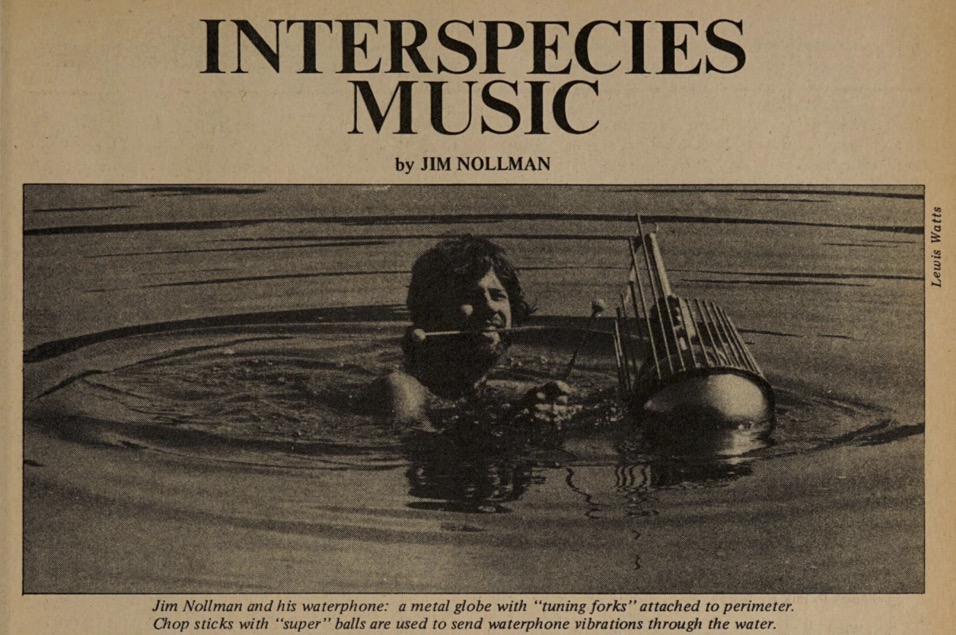
Other times, it took a while for him to find the right frequencies to attract the interest of the animals, as with a particular wolf, Arctic, in a pack of wolves. “Very slowly I lift my head high and quietly chant with Arctic, trying my level best to follow his voice with a precise harmony. Finally, it seems to me that my harmony is truly harmonious for the very air around us begins to shimmer in sound,” Nolan writes. “Arctic seems to notice also, for at that moment he sings out louder than before. I take this action as an encouragement to sing out. Such an incredible feeling of elation, chanting an ancient song to the descending night, with a large group of wolves and coyotes.” What I love in this work is the raw respect for the individual lives of these other animals. This feels like the opposite of Sea World’s shenanigans, where we force brilliant animals who would cruise the oceans into a circus show for tourists. Nollman, instead, is willing to be in the animals’ environments, working with their desires, and to no end other than partnership in this thing we call being alive. Nollman founded an organization that kept working until 2014 called Interspecies and I cannot recommend browsing its archival website strongly enough. This is a remarkable body of work and following the bread crumbs they laid down will lead you to some of the most interesting and esoteric places in Bay Area ecology. In the future, I think Nollman’s efforts will be seen as a milestone in a timeline that is just emerging of animal-human communication. When (if?) the day comes when we can truly understand the grammar of sperm whales, it will be not only because our pattern-matching computers got powerful enough, but because our own human minds were able to stretch enough to understand the experience of another species. To collaborate with animals is to try our level best to understand their ways of being.
|